


In the era of automotive electrification and energy conservation, start-stop systems have become a standard configuration in most modern vehicles, designed to reduce fuel consumption and carbon emissions by automatically shutting off the engine when the car is stationary. Behind this efficient system lies the unsung hero: the specialized Start-stop battery. Among the mainstream options, the EFB Battery and AGM Start-stop batteries stand out for their exceptional performance and reliability. Today, we’ll delve into the core details of EFB batteries—including their construction, usage, and storage charging—and explore why the 12V AGM Car Battery is hailed as a low-voltage beacon of reliability and efficiency in the automotive world.
First, let’s unpack the EFB Start-Stop Battery, a key player in supporting entry-level to mid-range start-stop vehicles. EFB, short for Enhanced Flooded Battery, is an upgraded version of traditional flooded lead-acid batteries, engineered to meet the higher demands of start-stop systems. In terms of construction, EFB batteries retain the flooded electrolyte design but feature enhanced components: they use thicker positive plates with special grid alloys to resist corrosion and vibration, a high-density separator to prevent plate short circuits, and an optimized electrolyte circulation system. These structural improvements enable EFB batteries to handle frequent start-stop cycles—far more than conventional batteries—while maintaining stable power output.
When it comes to the usage of EFB batteries, they are primarily tailored for Automotive Start Stop Battery systems in gasoline and diesel vehicles that don’t have high electrical load requirements (such as basic models without advanced driver assistance systems or multiple electronic accessories). During daily use, it’s crucial to avoid prolonged idling with the engine off, as this can drain the battery excessively. Additionally, regular driving (preferably 30 minutes or more at a time) helps the alternator fully recharge the battery, ensuring its long-term performance. For storage charging, EFB batteries require specific care: if the vehicle is not in use for more than two weeks, a smart trickle charger (maintainer) should be connected to keep the battery at a stable voltage (around 12.7V). It’s also important to store the battery in a cool, dry place, away from direct sunlight and extreme temperatures, which can degrade the electrolyte and shorten the battery’s lifespan.
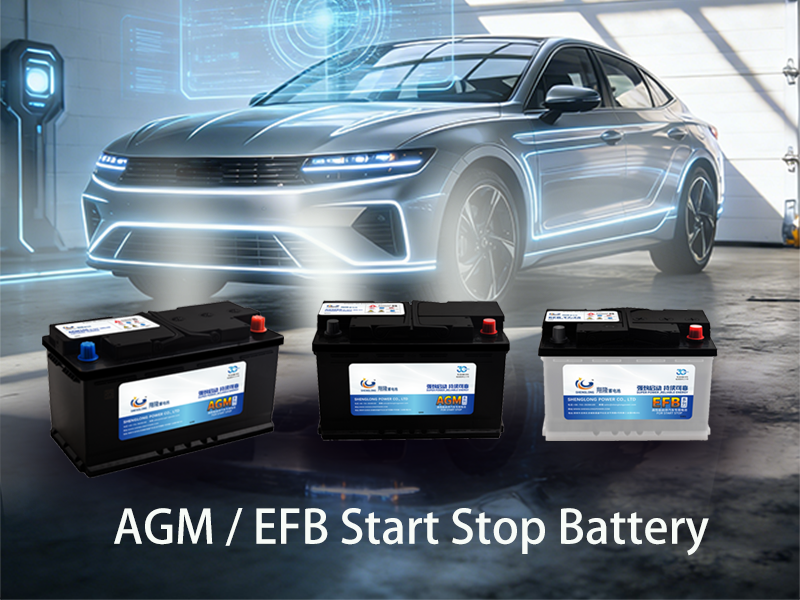
While EFB batteries excel in basic start-stop applications, AGM Start-stop batteries take performance to the next level, especially for high-end vehicles with heavy electrical loads. The AGM battery for car (AGM stands for Absorbent Glass Mat) uses a different construction: the electrolyte is absorbed into a fiberglass mat separator, eliminating free electrolyte. This design makes AGM Batteries spill-proof, vibration-resistant, and capable of deeper discharge cycles. The 12V AGM Car Battery, in particular, has become a favorite in luxury vehicles and those equipped with features like start-stop systems, regenerative braking, and multiple electronic devices. Its low-voltage reliability is unmatched—even under heavy electrical demand, it maintains a steady 12V output, ensuring all vehicle systems operate smoothly. Moreover, AGM batteries have a higher charge acceptance rate, meaning they can quickly recharge during regenerative braking or short drives, making them more efficient in real-world driving conditions.
Choosing between an EFB Battery and an AGM Start-stop battery depends on your vehicle’s requirements. If you drive a standard vehicle with a basic start-stop system, an EFB battery is a cost-effective and reliable choice. For high-end vehicles with heavy electrical loads, the 12V AGM Car Battery is worth the investment for its superior performance and longevity. Regardless of the type, proper usage and storage charging are key to maximizing the lifespan of any car start-stop battery. By understanding the unique characteristics of these batteries, you can ensure your vehicle’s start-stop system operates efficiently, reduces fuel consumption, and provides years of trouble-free service.
In conclusion, both EFB and AGM start-stop batteries are essential components of modern automotive technology, enabling the shift toward more energy-efficient vehicles. The EFB Start-Stop Battery offers a practical solution for basic start-stop needs, while the 12V AGM Car Battery stands as a low-voltage beacon of reliability and efficiency for high-demand applications. By properly maintaining and caring for these batteries—following best practices for usage and storage charging—you can keep your vehicle’s heart beating strong, no matter how often you stop and start on the road.